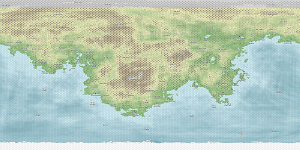
Warum Tetheril?

teth_alphaDas hier ist ein im Rahmen der letzten Writing Challenge entstandener Text, bei dem ich mir noch mal selbst klarzumachen versuchte, was denn eigentlich die Ziele meines eigenen Settings sein sollten. Ich rede darin eine Menge über D&D, da ich aber im Moment noch gar nicht so genau weiss, welches Regelsystem ich dafür benutzen werde (im Moment deutet so einiges auf 13th Age hin, da allerdings das eigentliche D&D sowie der Ableger Pathfinder deutlich populärer sind und mit mehr Material versorgt werden, bin ich da noch nicht so ganz sicher. Spielt jetzt aber aktuell auch nicht so die ganz große Rolle, auch 13th Age ist schließlich ein Ableger von D&D, und das Setting ist jedenfalls von der Welt größtem Rollenspiel beeinflusst.

Warum also Tetheril?

Der Aspekt, der mich (abgesehen von der Möglichkeit, gemeinsame Geschichten zu erschaffen) schon immer am meisten am Rollenspiel (und dem Fantasygenre im Allgemeinen) fasziniert hat, sind die Welten, die von Schriftstellern wie Tolkien und Martin oder Designern wie Ed Greenwood oder Keith Baker erschaffen wurden. Welten, die mehr sind als nur die wichtigsten Details, die für das Spiel notwendig sind, Welten, die ein eigenes Leben angenommen haben, und sich von der Geschichte unabhängig weiterentwickeln. Vielleicht liegt es daran, dass einer der am meist gegebenen Ratschläge für Spielleiter der ist, nicht zu viel Zeit auf den Weltenbau zu verschwenden, aber genau dieser Teil des Spiels ist es, der für mich am reizvollsten ist. Kurz gesagt, ist Tetheril der wahnsinnige Versuch, den Kreationen anderer Weltenschöpfer etwas annähernd gleichwertiges entgegenzusetzen, ohne deren Talent und Energie zu besitzen. Und natürlich ist Tetheril mein persönlicher Heartbreaker, in dem ich all das richtig machen werde, was mich an anderen Welten immer etwas gestört hat. Als da wäre:

1. „If it exists in D&D, then it has a place inEberron!“ Dieser Satz im im Kampagnenbuch für Eberron hat mich sehr stark beeindruckt, da er auf der einen Seite einen gewissen Größenwahn angesichts der schieren Menge an Material ausdrückt, die schon damals für D&D geschrieben worden war, da er aber auf der anderen Seite auch einen gewissen Widerspruch zu dem speziellen Flair einer Kampagnenwelt darstellte, die (anders als die Vergessenen Reiche) zu originell und wenig generisch erschien, als das man einfach alles mögliche reinschmeißen konnte, ohne dem Setting damit zu schaden. Für mich war dieser Satz eine Herausforderung, Elemente, die ich dem Setting hinzufügen wollte, wirklich auf eine Art in die Welt zu integrieren, die Sinn machte, konsistent zu den anderen Elementen Eberrons war und die Atmosphäre der Welt unterstützte, ohne sie zu einem generischen Kitchen Sink-Setting zu verändern. Das ist also auch der Ansatz, den ich für Tetheril wählen möchte, prinzipiell keine Elemente des Spiels auszuschließen, diese aber so einzubauen, dass sie sich wirklich wie Teile des Settings anfühlen, und nicht so wirken, als wären sie nachträglich einfach drangepappt worden.

2. High Magic Setting vs. Low Magic game. Schaut man sich die meisten D&D-Settings an, fällt auf, dass diese Unmengen an verschwundenen Reichen voller Magie enthalten, die der Grund dafür sind, dass die Helden des Spiels so viele Dungeons und Ruinen vorfinden, deren Schätze es zu plündern gilt. Ich liebe die dahinterstehende Grundidee, dass das Spiel in einer Welt stattfindet, in der das Wissen der Altvorderen verlorengegangen ist und seiner Wiederentdeckung harrt. Dummerweise wird diese Idee etwas dadurch konterkariert, dass die stärkste, welten- und ebenenerschütternde Magie den Spielern eigentlich von Anfang an zur Verfügung steht, was unter Umständen dazu führt, dass der ach so mächtige Runenfürst Karzoug im Vergleich zum hochoptimierten Magier der Gruppe ein armes Würstchen ist. Persönlich liebe ich den Ansatz von Mittelerde, einer durch und durch magischen Welt, durch die die Protagonisten (zumindest die Nichtelbischen) mit staunenden Augen hindurchwandern, und in der sich Heldentum gerade nicht daran bemisst, wer den stärksten Zauber memoriert hat, sondern daran, dass man sich mit Mächten anlegt, gegen die man eigentlich keine Chance hat.

Auf Tetheril bezogen heißt das, dass ich den Zugang zu (hochstufiger) Magie für Spielercharaktere deutlich erschweren möchte. Zumindest zu Beginn, im Verlauf der Entwicklung des Settings könnte sich das ändern.

3. Spiel in verschiedenen Epochen. Die typische Kampagnenwelt hat einen speziellen Zeitpunkt, zu der das Kampagnenspiel startet. Manche Welten bleiben zeitlich statisch, in anderen Welten schreitet die Zeit mehr oder weniger langsam voran. Ich bevorzuge letzteren Ansatz, weil ich Welten mit fortschreitender Geschichte (aka Metaplot) für die dynamischeren und damit interessanteren halte. Für viele dieser Welten gibt es auch Quellenbücher, die sich mit der Vergangenheit des Settings beschäftigen, was diesem zusätzliche Tiefe verleiht, meiner Erfahrung nach aber nur selten dafür benutzt wird, auch in diesen Zeiten zu spielen. Für Tetheril hat sich daher noch ein weiterer Ansatz herauskristallisiert, den ich gerne verfolgen möchte, nämlich das Spiel in unterschiedlichen Epochen, die zeitlich so weit auseinanderliegen, dass das Spiel in ihnen unabhängig voneinander möglich ist, die aber dennoch durch einen Metaplot miteinander verbunden sind, der sich den Spielern hoffentlich mit der Zeit erschließen wird. Letzten Endes wird daraus eine groß angelegte Saga der Menschheit in diesem Setting entstehen, ausgehend von einem katastrophalen Ereignis, dass fast ihr Ende bedeutet hätte (und eines der großen Mysterien des Settings darstellen wird).

4. Kultur und Regelelemente. Dieser Punkt beschäftigt mich schon eine Weile, da ich hier am ehesten mit dem normalen D&D-Ansatz in Konflikt geraten werde. Ich bin nämlich nicht besonders zufrieden damit, dass Regelelemente so generisch gehalten werden, dass sie quasi für jeden Charakter wählbar sind, selbst wenn sie im Widerspruch zu dem stehen, wie das Volk definiert wurde, dem der Charakter angehört. Ich verstehe diesen Anything goes-Ansatz, der vor allem den Spielern dienlich ist, die gerne so viele Optionen wie möglich haben möchten, meine aber, dass er dem Spiel bzw. dem Setting schadet, in dem das Spiel stattfindet, weil er letztlich die Wahlmöglichkeiten entwertet. Geplant ist daher, den Klassen, Archetypen und anderen Regelelementen einen stärkeren kulturellen Anstrich zu geben, so dass die Wahl des Volks bzw. der Kultur eines Charakters eine stärkere Rolle dafür spielt, welche Klassen, Talente usw. für diesen Charakter in Frage kommen. Dabei möchte ich nicht so weit gehen, Optionen einfach zu verbieten, allerdings möchte ich die Spieler dazu motivieren, sich Gedanken darüber zu machen, warum ihr Charakter Fähigkeiten besitzt, in denen eigentlich nur die Mitglieder anderer Völker und Kulturen ausgebildet werden, wenn sie denn einen solchen Charakter spielen möchten.

5. Die Ebenen. Auf der einen Seite bin ich ein großer Fan der Existenzebenen, die D&D ins Rollenspiel eingeführt hat und habe insbesondere das Planescape-Setting besonders in mein Herz geschlossen. Trotzdem hat es mich nie groß interessiert, wenn Abenteuer die Helden in diese Ebenen entführte, speziell wenn es auf höheren Stufen darum ging, irgendwelche Erzteufel, -dämonen oder gar -engel zu verkloppen. Für Tetheril habe ich daher einen kleinen Trick gewählt, um mich dieses lästigen Problems von vorneherein zu entledigen, indem ich die Welt nämlich in ihrer eigenen Halbebene einschließe, die in keiner Verbindung zum Rest des Ebenensystems mehr steht, während ihrer Entstehung aber Teile der anderen Ebenen mitgenommen hat, was die Existenz von Monstern ermöglicht, die aus eben diesen Ebenen stammen. Es wird ein paar Ausnahmen für Ebenen geben, die mir besonders am Herz liegen, und die man quasi als Spiegel- oder Zerrbilder der materiellen Ebene ansehen könnte (die Ebene der Träume, die Ebene der Schatten, vielleicht auch die Ebene der Feen), und die ich eher im Sinne von Robert Jordans Rad der Zeit-Zyklus interpretieren werde. Dadurch wird ein gewisses Maß an Ebenenreisen für diejenigen möglich sein, die im Laufe der Zeit herausfinden, wie man Zugang zu diesen Ebenen erlangt. Gleichzeitig stellt sich die Frage, ob die Halbebene Tetheril wirklich so hermetisch vom Rest des Ebenensystems abgeschlossen ist, oder ob man über den Umweg dieser Parallelebenen nicht vielleicht doch irgendwie Zugang nach Tetheril erhalten kann.

In jedem Fall wird das natürlich auch regelmechanische Auswirkungen auf Tetheril haben, worüber ich mir allerdings erst später Gedanken machen möchte (wenn ich weiß, welches Regelsystem ich in Zukunft nutzen möchte)

6. Gesinnungen. Gesinnungen existieren in Tetheril, allerdings werden die Konfliktlinien innerhalb des Settings nicht zwingend an den Gesinnungsgrenzen entlang verlaufen. Mir hat der Eberron-Ansatz diesbezüglich sehr gut gefallen, dass man nicht unbedingt auf den ersten Blick erkennen kann, ob eine Kreatur gut oder böse ist, zum anderen aber hat der Kampagnenhintergrund, der zur Entstehung Tetherils führte, einiges in dieser Beziehung durcheinander gebracht, so dass die Gesinnung einer Person/Kreatur nicht automatisch über Freundschaft oder Feindschaft entscheidet.

Insgesamt soll es mehr darum gehen, ob die Ziele einer Person oder Organisation den Zielen der Helden entgegenstehen oder mit ihnen übereinstimmen, als darum, ob jemand gut oder böse ist. Das soll den Spielern ermöglichen, ihre eigenen Entscheidungen zu treffen, ohne vom Setting dafür bestraft zu werden, die „falsche“ Entscheidung getroffen zu haben. Aber natürlich wird nicht jedes Abenteuer versuchen, die Spielercharaktere auf die falsche Fährte zu locken, manchmal ist der Bösewicht der Handlung auch einfach wirklich der Bösewicht.

7. Menschen und andere Völker. Ich hab das unter Punkt 3 schon angedeutet, aber letztlich erzählt das Setting die Geschichte der Menschheit nach. Anders als in vielen anderen Settings sind die Menschen aber nicht das dominierende Volk Tetherils. Ganz im Gegenteil beginnt das Setting mit der nahezu völligen Auslöschung der Menschheit und wird sie in gewissem Maße von der Gnade der Elfen abhängig machen, mit denen sie sich bis dahin eher in einer latenten Kriegssituation befanden. Dazu kommt, dass die Menschheit bis dahin eher technisch (im Sinne von Steampunk) orientiert war, während die Elfen ein durch und durch magisches Volk sind, dass für Technik eigentlich keinen Bedarf hat. Es bleibt abzuwarten, inwieweit die Menschen sich an die neuen Gegebenheiten adaptieren können und wie weit die Gastfreundschaft der Elfen reicht, die dass ihnen von Menschenhand zugefügte Unheil beileibe nicht vergessen haben.

Die ersten Kampagnen und Abenteuer werden also sehr auf diese beiden Völker konzentriert sein, wobei der Fokus eindeutig auf den Menschen liegt. Natürlich gibt es aber auch andere Völker in und auf Tetheril (bzw. wird es geben), die allerdings wahrscheinlich erst nach und nach eine Rolle spielen werden (je nachdem, in welcher Epoche die Menschen auf diese treffen). Hier habe ich allerdings noch das ein oder andere Problem zu lösen, wie die Völker in den Settinghintergrund einzubetten sind, da ich für ihre Entstehung verschiedene Ansätze verfolge und noch nicht im Einzelnen entschieden habe, welche Völker wie entstanden sind. Im Sinne von Punkt 1 habe ich aber natürlich eine unglaubliche große Auswahl an Völkern zur Verfügung, also die Qual der Wahl.

8. Drachen und die Götter. Sind in Tetheril gewissermaßen ein- und dasselbe. Es sind die Drachen, die Tetheril erschaffen haben, es sind die Drachen, die vor ihrem Verschwinden die Menschen (und andere Völker) erschufen und in gewissem Sinne auch die Entstehung der Elfen zu verantworten haben. Niemand erinnert sich aber mehr daran, allerdings spielen die Drachen als Schöpfer der Völker in den Mythen und Schöpfungssagen der Völker eine wichtige Rolle; sie sind die Götter, die in Tempeln und an Schreinen verehrt werden und die den Priestern, Klerikern und Schamanen ihre göttlichen Kräfte verleihen. Die (mögliche) Rückkehr der Drachen dürfte daher erhebliche Auswirkungen auf die Magie und die Religionen des Settings haben, ganz zu Schweigen von der Stabilität der Halbebene, die dadurch bedroht würde.

Bei der Ausarbeitung des Pantheons orientiere ich mich dabei an den verschiedenen Gruppen von Drachen, die im Rahmen der Pathfinder Bestiaries über die Jahre hinweg erschienen sind. Natürlich also chromatische und Metalldrachen, aber auch Imperiale, Planare, Esoterische und Äußere(?) Drachen, dazu eine Anzahl von Drachen, die keinem dieser Gruppen zuzuordnen sind. Insgesamt 46 Stück, dazu noch den Verräter (quasi ein Analog zum Namenlosen Gott aus DSA), also ein recht ausgedehntes Pantheon, dass ich glücklicherweise nicht von Anfang an komplett erstellen muss. Ich werde hier aber meinem Hang zum Würfeln nachgeben und insbesondere die Domänen der Götter zufällig erstellen, wobei es durchaus möglich ist, dass ein beliebiger Drache, der für eine Gottheit verschiedener Völker Pate stand, im jeweiligen Pantheon eine unterschiedliche Rolle einnehmen wird. Das hier wird also ein recht komplexes Unterfangen, aber da ich ein großer Fan davon bin, dass unterschiedliche Völker und Kulturen unterschiedlichen Gottheiten und Religionen anhängen, muss ich mir diese Mühe wohl machen

Wahrscheinlich werden auch nicht alle dieser Götter in jedem Volkspantheon Verehrung finden, wobei es durchaus Überschneidungen geben kann und wird. Die Drachen als solche werden settingtechnisch jedenfalls erst einmal keine Rolle spielen.

Mein erster Würfelversuch ergab übrigens folgende Domänen: Stärke. Bewahrung, Gut, Elf. Das passt doch schon mal ganz gut zu einem der beiden Hauptvölker, ich bin allerdings fast enttäuscht darüber, dass die Domänen so gut zueinander passen.

Zurück in die Vergessenen Reiche

GamalonIch habe in den letzten Jahren immer mal wieder über meine Liebe zu den Vergessenen Reichen gesprochen und auch im Jahr 2017 ist Abeir-Toril trotz aller Verwerfungen, denen es im letzten Jahrzehnt ausgesetzt war, immer noch meine Lieblingswelt. Andererseits bin ich ein ebenso großer Fan der Abenteurpfade PAIZOscher Machart, die aber dummerweise für deren eigenes Setting Golarion geschrieben wurden. Auch diese Welt (oder besser: Teile davon) mag ich sehr gerne, allerdings hat Golarion es nie geschafft, auf mich langfristig dieselbe Faszination auszuüben. Was möglicherweise der Entwicklung geschuldet ist, die Paizo vom Abenteuerverlag zu einem mehr auf Regeln fokussierten Verlag machte.

Wie dem auch sei, aus irgendeinem Grund kam ich letztens auf die Idee, mich mit der Giantslayer-Kampagne aus dem Hause Paizo zu beschäftigen und fast automatisch dachte ich daran, diese in die Vergessenen Reiche zu konvertieren. Wie üblich arten solche Ideen bei mir gerne mal aus und so bin ich wieder bei einem anderen Gedanken gelandet, nämlich meine eigene Variante der Reiche zu entwickeln und auszubauen und dabei Paizos Abenteuerpfaden wichtigen Einfluss auf die Geschichte Faeruns zu gewähren. 2011 hab ich mal mal auf meinem alten Blog so etwas angeschnitten. Damals ging es um die Idee, aus den ersten 9 Abenteuerpfaden einen gigantischen Megaplot zu zimmern, der die Helden am Ende gegen ein paar der mächtigsten Bösewichtern stellen würde, die die Reiche zu bieten haben. Im Moment weiss ich noch nicht, ob ich darauf nochmal zurückgreifen werden, daher sei das hier nur am Rande erwähnt. Für meinen neuen Anlauf sieht der Plan bisher allerdings so aus:

1. Wir schreiben das Jahr 1372 DR, das Jahr der Wilden Magie. Sprich die Grundlage für meine Variante der Reiche ist das Kampagnenbuch der dritten Edition, was nach wie vor für mich das beste Kampagnenbuch der Rollenspiel (oder zumindest D&D-)Geschichte darstellt. Ich hatte kurzfristig darüber nachgedacht, mit der Grey Box zu beginnen, weil mir das mehr Freiraum für meine Settingversion lassen würde, habe dann aber darauf verzichtet, weil mir der größere Detailreichtum des 3E-Buchs durchaus behagt. Das heißt nun nicht, dass ich alles Material aus diesem Buch oder gar der früheren Editionen als Kanon voraussetze, ich nehme es lediglich als Arbeitsgrundlage. Insbesondere heißt es aber auch, dass die offizielle Geschichte der Reiche ab 1372 in meiner Version so nie gegeben hat. Ich werde mir sicher einiges neueres Material aneignen, glaube aber nicht, dass die großen Geschichtslinien, insbesondere die Zauberpest und die spätere Teilung bei mir so stattfinden werden. Wobei ich wohl eh nie so weit kommen werde.

2. Für den Anfang werde ich neben besagtem Kampagnenbuch insbesondere mit dem 3E-Quellenbuch über die Silbermarken arbeiten, Und wo wir schon bei der Riesentöter-Kampagne sind, spielt natürlich auch Ray Winnigers Quellenbuch „Giantcraft“ von 1995 eine große Rolle. Außerdem /Stichwort: neueres Material) werde ich wohl auf die 5E-Kampagne „Storm King’s Thunder“ zurückgreifen und plane, die Plots der beiden Abenteuerpfade miteinander zu verbinden. Neben den Silbermarken wird daher wohl auch der Rest des Wilden Nordens und die Schwertküste im Zentrum des Geschehens stehen, weitere Quellenbücher über die Schwertküste, die Savage Frontier und den Norden werden also wohl nach und nach dazukommen. Ob ich auch auf die Abenteuer der Adventurer’s League zugreife, weiß ich noch nicht, halte es aber für durchaus möglich.

3. Regelseitig werde ich wohl weiterhin mit dem Pathfinder RPG arbeiten, da ich aber immer mal wieder darüber nachdenke, mir auch D&D 5E genauer anzuschauen, könnte es auf dauer auch in diese Richtung gehen, das halte ich mir offen. Für den Moment aber bleibe ich noch bei Pathfinder

Der Mehrgewinn für diesen Blog sollte in einer Reihe von Artikeln bestehen, die sich einerseits mit meinen Veränderungen am Setting und der Konversion der jeweiligen Abenteuer beschäftigen, andererseits aber auch Regelmodifikationen mit sich ziehen könnten, mit denen ich älteres Material auf den neueren Stand bringe. Außerdem schwebt mir eine Artikelserie analog zu Eytan Bernsteins früherer Class Chronicles-Serie vor, die die verschiedenen Klassen, Prestigeklassen und Archetypen in meine Version der Reiche einbindet.

Letzten Endes aber geht es mir vor allem darum, wieder aktiver als Spielleiter zu werden, und da ich in der Vergangenheit die Erfahrung gemacht habe, dass meine Zeit zu begrenzt ist, um sowohl die Arbeit am Setting als auch die an der praktischen Spielrunde in der von mir gewünschten Detailfreude und Qualität zu leisten, ist das hier quasi der Versuch, mit der entsprechenden Vorabeit mich später aufs eigentliche Spielen konzentrieren zu können.

Na gut, eigentlich ist das eine Ausrede, ich würde das nämlich auch machen, wenn am Ende kein Spiel zustande kommt.

What I wrote back then

MusingsSo, here’s a very free translation of what I wrote back in 2012, so as to make it easier for the english-speaking audience to get where I’m coming from.

Sometimes I have really weird thoughts and one of those (that I’ve been mulling over for quite some time now) is that I should try to get something useful out of the RPG stuff I read. At least more than just the enjoyment of reading that stuff and some cloudy ideas of what I could do with it. I’m very lazy though when it comes down to put things into a notebook, so a lot of the ideas I have while reading RPG books keep dissappearing in a dark corner of my brain or I simply forget about them completely.

It’s time to change that and as I just read through Kobold Quarterly #2, I’ll take this issue as my base from where to start. What of the content piqued my interest, what set my creativity machine in motion and can I use this stuff to create a complete adventure from it (or at least the idea of an adventure?)

So let’s take a look at the parts of that magazine that might be useful for such an endeavor. What do we have here?

We have:

  • Belphegor, the Baron of Lazyness and Invention and his comfort devils

  • Gustable Arondur, owner of the Broken Wheel Inn

  • Assassins

  • Barghests

  • Jeff Grubb’s system for using Aristocrat levels as a PC reward

There are also some things I don’t know what to with them directly:

  • an undead dragon

  • griffon towers

  • Paladin alternative class abilities

I’m a big fan of Ed Greenwood and his creations, so it doesn’t come as a surprise that it’s Gustable Arondur that stands right in the centre of my machinations. He is beautifully characterized by Master Greenwood as follows:

Arondur, who limps and aches in damp weather and stares longingly at every red-haired woman he sees.

Arondur, who is in awe of elves.

Arondur, who despises warriors in the army of the local king but a score-and-more years back was a hero in that same uniform, winning battles hereabouts for the king who was father to the present king. Why does he never talk of those days, and treats today’s soldiery so curtly?

Arondur, who owns all three roominghouses in town and the brothel, too, yet dresses simply and never spends a coin he doesn’t have to; where is all the money going? And who are the masked women who ride into town in the dead of winter and the middle of the night, once a year, to meet privately with Arondur, leaving him gray in the face and shaking when they depart?

Arondur, who can read books peddlers offer him, from lands beyond the sea whose names even they can’t pronounce.

Arondur, who is unmarried but keeps an outland girl in his bedchamber who has been blinded and had her tongue cut out. Those who get a glimpse say she is covered in strange tattoos that seem to be writing of some sort.” (KQ #2, pg. 15)

What follows is the result of the brainstorming I did over those things, back then. I posted everything in one article but in reality it took me two days to finish it.

Summary of the Adventure

Just before the PCs reach Yonder at the night’s beginning, they surprise a Barghest who’s just about to feed on the fresh corpse of a young woman he just murdered. When they have slain the beast (or at least have driven it off), they find a letter to a certain August Berronald, once the kingdom’s regent, that contains a dire warning of an assassination attempt commanded by none other than King Thorder himself.

The PCs need to find Berronald and help him to defend his life , hoping to enlist him to the Rebellion’s ranks. But though Berronald proves as grateful, he hesitates to do that. So to convince him to join the rebels, the PCs need to travel to the legendary Griffon Tower, to find a cure for the Archon of Justice that Berronald is divinely bound to.

Unluckily the Griffon Tower is inhabited by a young Dracolich that has added the cure to its hoard. The PCs need to find a way into the tower that is guarded by a family of griffons. Inside, they need to fight the Dracolich’s minions and the tower’s undead guardians, before they finally have to face the Dracolich that is’nt willing to give the Cure away for free.

Some comments:

Well, as it seems, a lot of those items I found immediately inspiring have gone to the adventure’s background and those that I didn’t know what to do with them now have taken central roles in my plot. On the other hand, my ideas have already expanded on the single adventure I planned to create. While brainstorming I suddenly thought about Dragonheart from 1996, that has some parallels to the relationship between Berronald and the former and the new king respectively. Now what if King Thorder had made the transformation into a Lich and the adventure’s Dracolich had, by means of the ritual that transformed Thorder, become his phylactery. What if Knight Bowen (errm, Paladin Berronald) had unsuccessfully tried to stop that ritual, severely hurting and defacing the Archon bound to him (by the way, I chose that Archon for her red hairs :D) in the ensuing battle (remember the young woman in his chamber room?)

And suddenly, we have a little campaign arc, that let’s the PCs join the Rebellion’s ranks at level 1, and after they went on several missions for the rebels (think level 2-4), they stumble (?) into the adventure outlined above (which I imagine to take place a t level 5 at the moment).

Healing the archon would immediately win the rebellion to Berronald’s support, who’s sson to be their leader and symbol of resistance. And here’s where the assassins from above come into play. For some reason, Berronald is linked to the kingdom’s assassin guild (the women that pay him a yearly visit), that is entangled in a deadly gang war with the Capitol’s thieves‘ guild that is led by a Barghest and used as a means to wipe out any resistance by King Thorder himself. To help the assassins might not also make them into a valuable ally but would also serve to weaken the evil king, the end goal obviously being to directly attack and beat him (and possibly put August I. On the throne instead).

And I guess that the PCs‘ reward might include one or two honorary levels as aristocrats as well.

This is what I wrote back then. I still kinda like the idea (especially as Paizo has done three Cheliax-AP s already and that stupid Thrune bitch still sits on her throne, so for once, I could show them how to do it :D), but on the other hand, if I really want to turn that into a full fledged campaign, I have a lot of holes to fill. Which would be the focus of the article series, that I mentioned yesterday and that I plan to do for this month’s Blog Carnival.


Me and my generators

MusingsI’m a big fan of random stuff generators. They can be an incredible tool that sparks your own creativity and, in comparison to adapting (aka stealing) stuff from other sources, they don’t influence you with the added fluff contained in those. I mean, I steal from any source I can and have a lot of fun doing it, but really making those things my own is just that bit harder than if you just have the skeleton.

Take for example Immarion, my elven metropolis in ruins that I’m planning to get inhabited by humans. There are great examples for such a city and as a fellow fan of the Forgotten Realms, Myth Drannor comes to mind immediately; but while I don’t mind if Immarion has a bit of those Myth Drannor vibes that I like so much, I also don’t want this to be just a copy of what has already been done before. And while I might find a lot of valuable things in any of the old 2e setting books, I don’t want to make this into a simple plug ’n‘ play game (apart from any legal issues this would cause).

That’s where random generators can really come in handy. For example, Johnn Four from roleplaying tips.com just mailed my a link to a fantastic city map generator, that I immediately used to get a map for my elven city. I would love to have a full-colored, detailed city map somewhere along the road, but for starters, I can easily use this thing as a template for my adventures playing in this city. In the same vein, I might use a couple of other generators from one of the several fantastic sites I’ve stumbled upon in the past.

For example, I can use other generators to create the demographics of that city, I could fill it with randomly generated buildings and NPCs, I could even create whole plotlines and adventures based on random generators. So this approach can really be helpful to create something on the fly, but it can also serve to help you find a new angle if you get stuck writing your setting.

In my case, I might use those to get a feel for how the city originally looked like, before it got devastated by the war efforts of the humans and abandoned by the elves. What I especially need will be locations for the PCs to explore, monsters and other opponents to battle and treasure to be found. I already have some ideas about that, but I will probably need a lot of ideas for those parts of the city that aren’t integral to any plot I might come up with.

Here are the sites I frequent most when it comes down to using random generators. They contain a multitude of generators for different topics, so no matter what you look for, you might be able to find it at these sites.

Random Tables, a site I just stumbled about that presents a lot of links to other sites with generators.

Seventh Sanctum

Chaotic Shiny

Donjon

And a little shout out to d20srd, a site I used to frequent heavily when I was still running 3E games; when I visited it recently, I was pleasantly surprised to see that not only it got extended to include the 5E SRD, but that also the GM tools section was expended on with different generators.

Staring at Monsters – The Alp (2)

Ok, here are two ideas how to use Alps as the centerstone of an adventure:

When the metropolis of Immarion was settled by the humans that had survived the end of Veldenia, they couldn’t know that this would awake the vengeful ghosts of a past war. Only when a sudden outbreak of a strange illness befalls several members of the small human community, old ship’s doctor Haydriff suspects that there is more behind it and contacts a group of adventurers to find a cure for that illness.

Comments: I hinted at that in my last post, but the idea is the elven metropolis suffered vast destruction in the last war between elves and humans. A lot of Immarion’s inhabitants suffered a grueling fate and some of them became Alps. Now, when their ancient home is suddenly inhabited by their old enemy, they seek revenge. I could imagine one of the still living elves being the mastermind behind that attack, because he can’t stand the thought of his old home being desecrated by human presence

The little town of Yonder is threatened by a hunger crisis when the farmers around that town report, that their cows have stopped giving milk and smaller livestock is found crushed to dead on the meadows, without any obvious hints why this would happen. Investigations show that there’s only one farmer whose cattle is totally unaffected by those events, and it doesn’t take the other residents of that area long to suspect him of being the culprit behind that catastrophe. Fearing for his life, farmer Padley asks a group of adventurers to protect his life and to find out who or what’s the real villain behind these events.

Comments: For this idea, I imagine that this adventure starts at a time when the humans have returned to their old home continent. No one knows that Yonder lies where once a human city stood that fell prey to the devastation of the Cataclysm and became a mass grave for its inhabitants. Here I think I could easily use the shape-shifting aspect of the Alps, and to solve the riddle, the PCs might have to find out where those Alps came from and put their poor souls to rest to save the still living. Oh yeah, and why is the farm of Old Padley the only one not to be affected by the curse?

Word Count: 396

per/day: 340 (well, this needs to get better ^^)

Tetheril through time

teth_alphaOk, first, dammit, already failed the challenge I set up for myself on day 2. Well, I’ll simply pretend it didn’t happen. But in the meantime, I’ve read some blogs, had some ideas, so the adventure ideas for the Alp might still have to wait for a bit.

First off, I should talk a bit about Tetheril, the setting I’ve been brainstorming for a couple of years right now. In my head, it went through various stages, and as I’ve real difficulties to cut away stuff, at the moment, I’ve kinda kept all those stages and turned them into different time points of the same setting. Here’s what I have so far in chronological order:

1. World creation: The history of Tetheril is not really important at this point and serves only to explain how this world came to be and why certain things are different from what a standard D&D campaign might be like. Questions like why is there no plane-hopping possible and why is Tetheril still populated with planar beings? Why is magic functioning the way it does (or rather: doesn’t) and why are there no dragons? And when the status quo on all this questions start to change, what might this spell for the future of the world? I think I might get more explicit about all that stuff in another post, but as it just serves as a starting point for my ideas, it might change or even be totally rewritten at any time.

2. Once upon a time: Like in Eberron and Golarion, the actual campaign start coincides with a big world-shaking event. In my case, it’s a catastrophic cataclysm that completely destroys the continent that used to be the home of the human race and makes it absolutely inhabitable for the time being. The few survivors have no other choice than to seek shelter with the elves, which is a bit of the problem because the human-elf relationship was very shaky before. The elves will allow them to resettle a bigger island before the elven main continent, including the ruins of an old elven metropolis that was abandoned by the elves during the last war between elves and humans.

3. Nothing like the present: A whole lot of time later (think millenia), the humans have enough of the elven hospitality (for reasons) and decide to go looking for another home to live in. An expedition finds another continent and soon stumbles about hints that this might be the old human home of legends that no one knows why they had to leave it in a past long gone (the elves might know, but they aren’t saying :D). Humans start to resettle that continent that is not quite as empty as you might expect, given what I wrote about it’s destruction before.

4. You never know what the future holds: Well, actually I do know a bit about that. Again, time has passed, humans have settled parts of the continent, but so far, no one has able to find the location of the capital of the historic human kingdom. That might change , but you know the old saying? Be careful what you wish for, because you might not like, if you finally get it?

5. The big finale: Remember the questions I asked in the world creation paragraph? Well, there are answers to them, and my main problem with them is that while I know how I want them to answer, I have actually no idea how I can answer them without destroying the setting once and for all. This is really high level cosmological stuff which I might completely ignore except for the “one campaign to end them all”- campaign. If you have read the Marvel storyline before the 2015 Secret Wars event, when the Beyonders decided to completely destroy the multiverse, then that’s kinda what I’m talking about.

So what I have here is in fact several settings combined into one, and if you believe that I’m a bit megalomaniac thinking this big, you might be totally right. What it mainly does for me, is that it gives me several docking points for stuff I create/steal for the setting, because when something I stumble about doesn’t fit the part I’m working on, It might still be usable for another part of the world. Also it allows me to create adventure arcs (that I already have in mind), that can be played independently and still have common ground in that they are using the same setting. Plan is to work mainly at the earliest part of the setting and then go from there through time. But I’m a free man and I can totally change my plans as soon as another idea strucks me.

Word count day 3: 791

average word count: 436 *sigh*

If I could turn back time…

Well, originally I wanted to make another post in which I put out some ideas about what to do with the „Abbey of the Crusader Goddess“ in my own setting, but as that could get kinda confusing I think it’s better to talk a bit about the setting itself, especially about where I started with it and where I landed at the moment. Because in fantasy worlds, you sometimes can turn back time and that’s what I did while mulling ideas in my head over and over again.

So where did it started ? It kinda started with this sentence I found in the 3.5 Eberron Campaign setting: If it exists in D&D then it has a place in Eberron. What a bold and impressive statement that was. And given that I was an avid reader of all things D&D at that time and that I tend to get a lot of ideas just by reading things, I immediately thought that it would be awesomely cool to make that statement my own and build a world containing all the ideas I found in the books or magazines I was reading (with the additional caveat that it should all make sense and still feel like a cohesive setting).

From that point I developed the idea of a world created by dragons, shut up from the rest of the universe in a closed demi-plane [insert long cosmological background here]. Dragons would have gone extinct on that world, and as they were the universal bearers of magic, magic would be all but gone as well. Until the barriers between that demi-plane and the surrounding material plane started to dissolve and magic crept back into the world (and with the magic the dragons would return), though that was planned to be the theme of the adventures to be played in that setting. By the way, I think the dragon theme was inspired by Eberron as well, as Tetheril (the setting’s name) was literally the ancient time dragon that created that world.

Now, the reason for the slow dissolution of the plane’s barriers was intended to be a big cataclysmic event that all but destroyed the continent on which the human race had developed. So I developed the idea that in a future age, humans would return to that continent to resettle it, eventually finding out what the mystery behind that cataclysmic event was. I’m not totally sure about the timeline, but I think that at that time, Pathfinder’s Kingmaker AP was published and I thought that hexploration was a good way to introduce players in a setting totally unknown to them. By exploring the continent, they would not only learn about the general setting, but they could also delve into the human race’s history and learn about past events as those started to shape the present and future.

In the meantime I had suffered a severe case of GM burnout and basically stopped doing anything roleplaying-related. I probably would have totally given up on the hobby, if not for Johnn Four, publisher of the Roleplaying tips, who started an adventure workshop in which he let me (and other interested people) take part in his design of an adventure and invited us to develop our own adventure parallel to his. I have to admit that I didn’t succeed with that, but it renewed my interest in the hobby and it brought some new inspiration. And this is where the first time jump comes in. Because when originally I had planned to start with the landing on their old/new home continent, the adventure I had planned for the workshop was intended to be a prelude to that, basically explaining the reason for why the humans wanted to go back to the old continent. (in short: after the cataclysm they had found refuge with the elves that lived on another continent, but because of old enmities they were basically living in a golden cage which is nothing human nature is suited for.)

I didn’t went through with this idea and again, things kept simmering in my stew pot brain, until I got (again) an email by John, in which he announced a second walk-through through his workshop, only that this time, he went from a messageboard to a homepage-based format. I started again, but in the meantime, another idea had formed in my head. And here comes another time jump back to the past.

Because in the meantime, I had found out for myself that one thing that I really don’t like in campaign settings, is that more often than not, that there are big-world-shaking events that you never get to experience first hand because the campaign starts well after those events took place. Think Golarion, where campaign play starts 100 years after the death of the god if humanity, think the Realms‘ Spellplague, that was a major shake-up between the editions, only that 4E started the campaign when it already was over (again, 100 years later). Contrary to that, Eberron really clicked with me because there the campaign started directly in the aftermath of such an event (the destruction of Cyre resulting in the end of the Last War), so the direct consequences of that were point and center of campaign play in that world.

So why not start directly after the destruction of the homestead of humanity (I would have started with it, but that would have meant explaining the mystery around that event) and the rest of humanity finding shelter with the elves. The idea was that the elves would allow the humans to settle an abandoned elven city located on an island before the coast of the elven kingdoms. So I could still have exploration of a new setting, but I could also explore what the loss of their old home and the reliance on what they used to consider an enemy would mean for the human survivors.

And this is basically where I am now. A huge elven city in ruins (think Myth Drannor) to be explored and to be settled by the PCs, maybe finding new allies (and enemies) in the process. That does not mean though that I’ve given up on all those other ideas I had before. In fact, wouldn’t it make for an awesome chronicle of the world of Tetheril, if I could succeed in developing the different parts throughout time and space and make them into a coherent hole?

Guess I’ll better start soon, because I’m only human and my life is finite.

The Times they are a-changing

teth_alphaAnd it’s with great pleasure that I congratulate Mr. Bob Dylan to finally get what he has deserved for a long time now. He has probably had more influence on modern culture than the last 20 winners of the nobel prize for literature combined, so it was time he got the prize.

But that’s not why I choose this title. It’s because of the changes my ideas went through the last few years, which I wanna talk a bit for now. It’s been nearly 8 years ago that I started thinking about creating a new setting called Tetheril which was basically it’s own demiplane shut off from the rest of the multiverse by certain events that brought it into existence. I’m somewhat vague here because I still plan to use this idea, which originated in my dislike for planar travel ( I love the D&D planes for all they add to the game, but hate to see heroes trying to conquer Hell or the Abyss just because they are high level enough). Nothing much came out of this, because real life took a wrong turn and I had other problems to solve first.

Two years later, Paizo piqued my interest in hexploring with its Kingmaker Adventure Path, and I started thinking about using this to introduce players to my setting when I finally had enough material together. I also had read a cool Image comic called Impaler about the world being suddenly overrun by vampires and this together with some articles I had read in the online Dragon magazine and with what already had stewed a while in my head eventually was the source of what I tried to do with my setting:

What if a great cataclysmic catastrophe had destroyed the human lands, forcing the few survivors to seek refuge with the elves. And what if, in an coming age, tensions between humans and elves would lead the humans to leave their refuge and return to what was once their home? With no memories, only myths, of what had happened ages ago, so they had to rediscover what was once theirs?

So when I started last year’s edition of Johnn’s Adventure Design Workshop, I originally intended to have as my first adventure the landing of the humans at their new/old home and the events following. But this bit with the elves giving the humans shelter kept nagging at my mind and I thought it might be a cool idea to start with the events around the human’s departure from the elven shores instead. This way, the players would get a bit of perspective of the setting and of the motivations of their characters. Problem being that now I hadn’t only to think about a new continent for the PCs to explore but I had also to create the elven city they lived in before the exodus. Or at least so much that I could make play in this city interesting. Even then, I thought it a bit a waste of time to create a home base just to leave it as soon as possible (and I remember Pathfinder players being not to happy about getting such an interesting location as Sandpoint in Varisia is – only to take extended leaves during the rest of the AP). But the was the prize I did have to pay.

Or didn’t I?

Come this year, and here I am, picking up where I left and continuing my journey, already having rolled for my elven metropolis and still being not too crazy about having to built it from scratch. Maybe I should take some time with my PCs before them leaving for new lands, just to make the effort worth it? But what should I do with them? Not much to explore in a city humans have lived in for quite some time (around 5000 years, I thought), and I also didn’t want to do too much stuff which didn’t connect with the overarching themes of my setting. Building on the tensions between elves and humans? Might be a possibility, but wasn’t actually what I wanted to do, because I didn’t want to put the players‘ focus on that too much. Looked a bit like a dead end to me, and when that happens, I like to shift my attention somewhere else to give my subconsciousness time to work on the problem. And as I had nothing better to do, I took a look at the next video in line, in which Johnn talks a bit about the pre-planning stage of adventure design and about the concept of the “Razor”, a mechanism which allows the designer to make informed decisions about the inclusion of design elements based on certain themes the adventure is built upon. To give an example: When Paizo announced their new Starfinder setting (to come next year), “they described it as meeting half way between BattleTech and SpellJammer.“ Which already gives you an idea of what Starfinder will be about.

I started to ponder what my razor would be this year. I intended to let the players explore cool elven ruins, so Indiana Jones came directly into mind. Then I envisioned this elven city and the isle it is located on as kind of a prison; not as in a real prison but more as an enclave the human’s should not leave without the elves permission (maybe they even can’t without the elves help). But there was still the disconnect between the exploration I’d like the PCs to do and the fact that they already might have done that in the millenia past.

And then something clicked. I had already gone back in time once, so why not doing it again? If I went back to the time the humans arrived at this city, I could actually let them explore the city and make it their own. I could actually use all the stuff I had thought about in actual play instead of using it as background material. I could let them help developing the relations between elves and humans AND I could let them experience the prison-like character of the sub-setting they’re moving in (in time that is, I don’t expect that it will play as much a role in the beginning). So in the end, this is what I came up with as a razor (and man, how is that different, from what I had in mind during my first experiment with the workshop, the times are really a-changing):

The Ruins of Myth Drannor (elven city exploration and rebuilding)

meets

the Pathfinder Society (organized investigating and treasure-seeking)

meets

Gothic (the great CRPG, where you first have to settle in what’s basically a big prison and eventually will have to find a way out; and yeah, as in the game, there might be a BIG endboss waiting for you *whistles innocently*)

Keep in mind, though, that this is more the razor for this part of the setting. The adventure I try to develop for this workshop will mostly concentrate on the first aspect, I guess. So a sub-razor would be something like:

Bard’s Tale meets Kingmaker

combining the city exploration with the city rebuilding aspect .

And so it began…

Musings„If it exists in D&D, then it has a place in Eberron!“

This bold statement was the start of it all. Part of the „Ten Things you need to know“ (in the Introduction of the Eberron Campaign Setting) totally got my attention. That a setting with such a different tone from the normal kitchen-sink D&D fantasy setting could still claim to be kitchen sink was something I’d never thought possible beforehand and made me rethink what I actually wanted to do with setting design. Now given the sheer masses of material written for any edition of the game, it seems physically impossible to do this, but at least this idea made me rethink my former policy of disallowing a lot of stuff which didn’t seem to fit into any given setting.

In the meantime, I’m all about allowing stuff, but under one condition: You have to be willing to modify the fluff to fit into the setting we chose to play (for example there are no Warforged in the Pathfinder Setting of Golarion, but with just a bit of rewriting, we surely could find a way to import them).

This is also the way I tend to read role-playing material from whatever source: How can I make it fit into my setting. So let’s that make RULE ONE for the design of Tetheril (the name of my world):

1. If it exists in Pathfinder, then it has a place in Tetheril!

And just to be clear: I do not intend to restrict myself to Paizo material only. But given that PFRPG is the engine that drives my game , this should be a minimum requirement. So I’ll give you rule 1.1

1.1. If it exists in the OGL universe, then it most probably has a place in Tetheril too.

And as if that wouldn’t be already overwhelming enough:

1.2. Without outright stealing, taking inspiration from D&D 1-5 or even other RPGs is explicitly allowed.

There are other rules I strive to follow:

2. The setting will be created through adventures first, through a campaign book second.

This is something that was originally the idea behind the Pathfinder Adventure Paths. Not to develop the setting through a lot of setting books but through the actual adventures written for Golarion. This policy has changed a bit in the meantime, and might also change for my setting someday, but at the moment, I hope that it will keep me from doing stuff that is not really useful at the moment. By the way, if I’m saying „book“, you’d better take this metaphorically. Maybe this will someday end in a publishable form, but that’s a long way to go, if I can go it at all.

3. Preference for low- to mid-level game.

I’m a big Eberron fan and what I think the setting did really well was to give a lot to play for characters between level 1-12. There were high-level dangers which would later be expanded upon, but at it’s core it wasn’t written with lower level characters in mind. I’ll try to take the same approach. Start small, but with the possibility to expand.

4. Low-magic approach

This is a bit tricky, so let me try to explain. One idea behind my setting is that magic has become scarce for some reason I’m not willing to share yet. There’s still magic there but mostly in the form of low-level magic. And (at least in the beginning) magic will even be more restricted for the player characters though that is something which will hopefully gradually change over time. So given what I said regarding point 3, I’m not sure if this will restrict player characters too much or at all, but if you expect the same magic level and magic wealth of the Realms, Golarion or other high-magic settings, you might get disappointed. This might also involve heavy tinkering with the rules and at least a bit nerfing of the Tier 1 and 2 classes.

5. Alignment isn’t what you think it is

This is also something I liked about Eberron, how it played with the alignment system (and thereby with the players‘ expectations). So I hope that I can create a setting where alignment isn’t something absolute but more of a gray area. And there might even come surprises in the form of inter-alignment alliances. So if you can’t handle Paladins working together with „evil“ persons, this setting might not be for you. There will be fight, there will be conflicts, but whose side you might find yourself fighting on has not necessarily to do with alignment

6. Culture and Race might define class choice

Well, in the beginning there won’t be many races to chose from because it will mostly center on humanity and there’s a lot of exploring to do. What I mean about that is that I will try to make cultural and racial choices of class and other options so appealing that players don’t necessarily look for the mechanically best option. There will be no hard restrictions, but setting-side it should be very clear that dwarves cannot take levels in the dragonrider class, because only elves have learned to tame those beasts and they don’t share the secret (just an example, which will most probably have nothing to do with my setting). So at least at my table, if a player comes up with this great idea for a dwarven dragonrider, he’d better have a good background explanation for how this came to be. Because, quite frankly, while I understand why official settings tend to be as nonrestrictive as possible, I don’t think that it necessarily makes for a good setting, if anything goes. Luckily, the Pathfinder archetype system gives me a lot to work with.

Well that’s it for today, but I wanted to get it out of my chest before I really start with working on my adventure.

Awoken from a long slumber

MusingsAn e-mail I got woke me from my slumber. It informed me of the fact, that Johnn Four’s Adventure Workshop (I already talked about that) goes into its next incarnation, meaning that Johnn rearranged the old videos and put them together in a new format accessible to new and old participants alike (I have no idea if it costs anything for newcomers, as a participant of the original workshop I had immediate access, then we paid a small fee I still consider to be well-spent money).

Well. That e-mail also reminded me of the fact that I had wasted to much time with not doing anything creative, so I’d just give it a new try, the blog as well as the workshop. And as I started it from anew, I came upon my first task, namely doing my First Move. This term describes the first step you take into the design process and Johnn suggests, you try to find something what works for you and start the process with excactly this thing everytime. For adventure writing, things that automatically come to mind are the heroes‘ home base or a map of the location the adventure plays in. Could also be the adventure’s villain or anything which gets your creative juice flowing (which is what the First Move actually is supposed to do).

Now in my case this is a bit more complicated, because I don’t only intend to write an adventure, but also to design the setting in which this adventure plays. This setting is based on a lot of ideas I had in the last 15 to 20 years that I never got penned down on paper. And some of the ideas may require tinkering with the system (or, to be honest, rewrite it in a way that fits my vision) but I’ll leave that aside for now. Which means that I’ll probably start with a more generic version of the adventure and change it later according to my needs.

At first I just wanted to tackle the ideas I had through the first workshop. Without going into too much detail, the adventure was planned to start in a city which would only serve as location for this single module (I already planned for a bigger campaign arc which would mostly play at another continent). In the meantime, I think that would have actually been a waste of opportunity to explore said city and thereby explore one of the base premises of my whole setting. So I decided just to stay in this city for a while. Meaning that my First Move would be to think about this city with the intension to flesh it out at a later time.

And while I already had some ideas of my own, I still like to add a random aspect to my creations to challenge myself thinking in new directions, so I decided to roll the dice to create a Stat Block for my city using the Pathfinder settlement rules from Pathfinder’s Game Mastery Guide. Just to have more material, I added stuff from a thread in the Paizo forums which made it into Nairbs Settlement Creator. I did the same with Otherverse Games‘ “Cityscapes – New Settlement Options for the Pathfinder Roleplaying Game”. And then I let the dice decide.

Here’s what I came up with for a start:

Settlement Type: Metropolis

Population: 67315

Alignment: Lawful Good

Government: Council

Qualities: Defensible, Eldritch, Good Roads, Pocket Universe, Unaging, Hardened

Next time, I’ll tell you a bit what I intend to do with this stats and how it fits into my larger vision of my setting.