 Yesterday, I read two extremely interesting articles by The Angry GM about how race and culture can interact with each other. The first one, „Making Race and Culture matter in RPGs“ basically tells you not to be afraid of stereotypes, when it comes to the description of races. The main argument is that the human race – as the game’s standard race – is already built to be very flexible and to make any character possible, so the only way to stand out while playing another race would be to build on a strong archetype (which are sometimes dismissively called stereotypes) to avoid feeling like a human with . That doesn’t mean that any dwarf must look-alike, but even when you deviate from the norm, it’s better if you start with that archetype in mind, because it strengthens the design of your exceptional character and he won’t feel like a human in a costume.
The second article is from 2015 and discusses „Why Race isn’t broken in Pathfinder and How to fix it“ (I love that title :)). Here, The Angry GM talks about his issues with races having abilities that partly seem learned by training, partly being a race-inherited trait, which poses the problem that even when you’re growing up in a vastly different environment (let’s say an elf growing up in a human orphanage) and never had contact to your own people, you would still have those racial traits that you would have learned by training. What follows is a stroke of genius (well, The Angry GM might say: „What the s$&%y do you wonder? I f$&% told ya that I’m the best!“), because he uses the race building rules from the Advanced Race Guide to split the racial traits into two packages, one containing the genetic traits, the other the cultural traits, and now, when you’re building your character, you can just chose which packages to use so they better fit into the background of your PC.
That is simply awesome because it’s so incredible simple and even better, you can use the same system to build your own templates in case you use other races in your game. Which is highly interesting to me because I might fiddle a lot with the races‘ culture for my own setting and this gives me an easy way to do that. On a side note, I also planned to express a race’s culture by their choice of classes and archetypes respectively, so if for example, only elves are allowed to become rangers (stupid example, I know), members of the other races could, given the right cultural background, still take levels in that class.
Another topic: Campaign Mastery is hosting this month‘ RPG Blog Carnival. I had already planned to participate in that carneval for quite some time, and November’s topic seems at it would be a perfect fit for me to finally do it. It’s quite a long topic title, actually: “The Past Revisited: Pick a post (your own or someone else’s) and write a sequel. Should include a link to the original article if it is still online.” I immediately thought about an article I had originally written in 2012 (which would mean that I get extra points :D), ironically a sequel itself to a review I had written about the second issue of the Kobold Quarterly magazine. In that follow-up article, I had developed the idea for an adventure that was based on certain themes and topics in KQ #2. And more, I even had imagined how that would fit into a greater campaign arc. Nothing came out of it (in terms of me going on and developing that idea), but it stayed on my to-do-list, and this month’s Blog Carnival topic might just be the kick in the ass I needed to finally going back to that and doing a little series of Blog entries in which I expand on that idea.
I’ll probably start with translating the original article that was still written in German, and then go on from there. And if all goes well, I’ll end this month at least with an outline for the whole campaign.
 Ok, first, dammit, already failed the challenge I set up for myself on day 2. Well, I’ll simply pretend it didn’t happen. But in the meantime, I’ve read some blogs, had some ideas, so the adventure ideas for the Alp might still have to wait for a bit.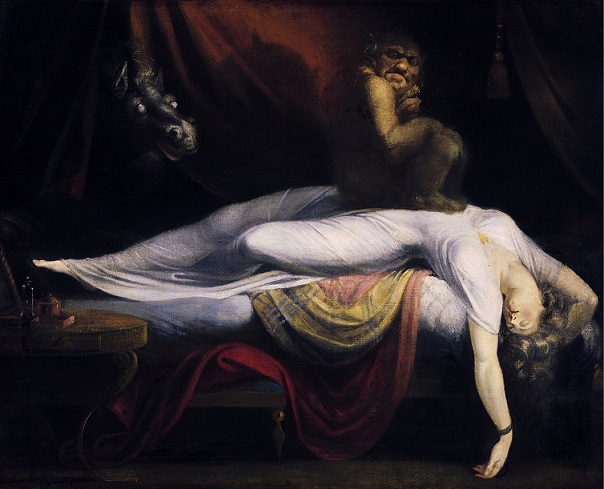
 The cover of dragon #27 depicts a knight in shining armor readying an attack , lance in his hand, sitting on his horse. Good example of what Editor Tim Kask admits in this issue’s editorial, that some of the covers so far were, let’s say mediocre. And why’s he saying that? Well, #27 is another birthday issue and Mr. Kask takes the opportunity to look back on what The Dragon did well and what it did not so well. He’s also looking forward to what is yet to come, though most things he talks about come down to ‚more of the same, but better‘.
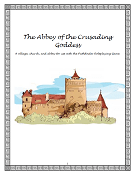 The Abbey of the Crusading Goddess by Cian’s Basement Books comes in at 18 pages (1 cover page, 1 page ToC, so it’s basically 16 pages of actual content). Layout is simple, but clear, and the font size might be bigger than in other products but I found that it made reading the product quite easy, and I didn’t feel that it came at the cost of the content.
 Wormys Welten

